
Students from across New South Wales showing a passion and flair for science were awarded last night’s Young Scientist of the Year Awards. Michaela Loukas from Marist Catholic College Penhurst, in Southern Sydney, took home the title of Young Scientist of the Year for her project Assessing the Accuracy and Interpretability of a Recurrent Neural Network for Breast Cancer Classification and Molecular Subtyping using Ribonucleic Acid Sequencing Data.
Noah Riva, from Barrenjoey High School, and Thea Barron from Lambton High School, came in equal second for their projects Spatial Heterogeneity of Surface Water PFAS Levels along the Snowy River, from its Source to Lake Jindabyne and Impact of our shorelines on the fragmentation of microplastics.
Rural Young Scientist of the Year was awarded to Holly Bennett from Kinross Wolaroi School, for her project Reproductive Rate of Maiden Ewes and the Relationship with Liveweight at Mating and Birth Type.
Kushmi Jayaratne and Lotem Rotman from Armidale City Public School were awarded Rural Primary Young Scientist for their project Ready, Set, Ant.
Primary Young Scientist of the Year was awarded to Kaelyn Chik, Presbyterian Ladies College, for her project Ocean Acidification and Its Effect on Octopuses; The Budding Young Scientist, for the top student in years K-2, was awarded to Blake Rhim, of Arden Anglican School.
Generously supported by The University of Technology Sydney (UTS), this was the 33rd year of the Young Scientist Awards Program, which celebrates scientific and technical innovation of K-12 school students around the state. Since 1992, the program, run by the Science Teachers’ Association of New South Wales (STANSW), has been encouraging students to undertake innovative projects and investigations to find creative solutions to real-world problems.
At the ceremony, the winning students received awards and monetary prizes for their innovative science projects. This year’s competition attracted more than 500 project entries from across the state. The full list of winners can be found on the Science Teachers’ Association of New South Wales website here.
After the Young Scientist Awards Ceremony, selected students from each region of NSW will go on to represent the state at the National Science Awards – The iCubed Awards.
Vice President of The Science Teachers’ Association of New South Wales, Dr Lauren McKnight, says the Young Scientist Awards provide a platform for students to showcase their scientific curiosity, thinking and creativity.
“Through the Young Scientist Awards, students engage with authentic practices of science. They ask questions, test ideas, and put their scientific skills into action. In doing so, they create something genuinely unique, driven by curiosity and the desire to explore the unknown.
“These experiences help young people see science not just as a subject, but as a way of understanding and shaping the world around them. By celebrating their achievements, we’re also recognising the creativity, persistence, and critical thinking that fuel Australia’s future innovation.”
This year’s Young Scientist Awards is supported by program sponsors: University of Technology (UTS), Australian Skeptics, Future You, Stile Education, Rowe Scientific, AARNET, Australian Institute of Physics, Royal Australian Chemical Institute, Australian Society for Biochemistry and Molecular Biology, STEM Reactor, STEP Inc and Passionately Curious.
View all 2025 Young Scientist of the Year Award Winners Here!
-
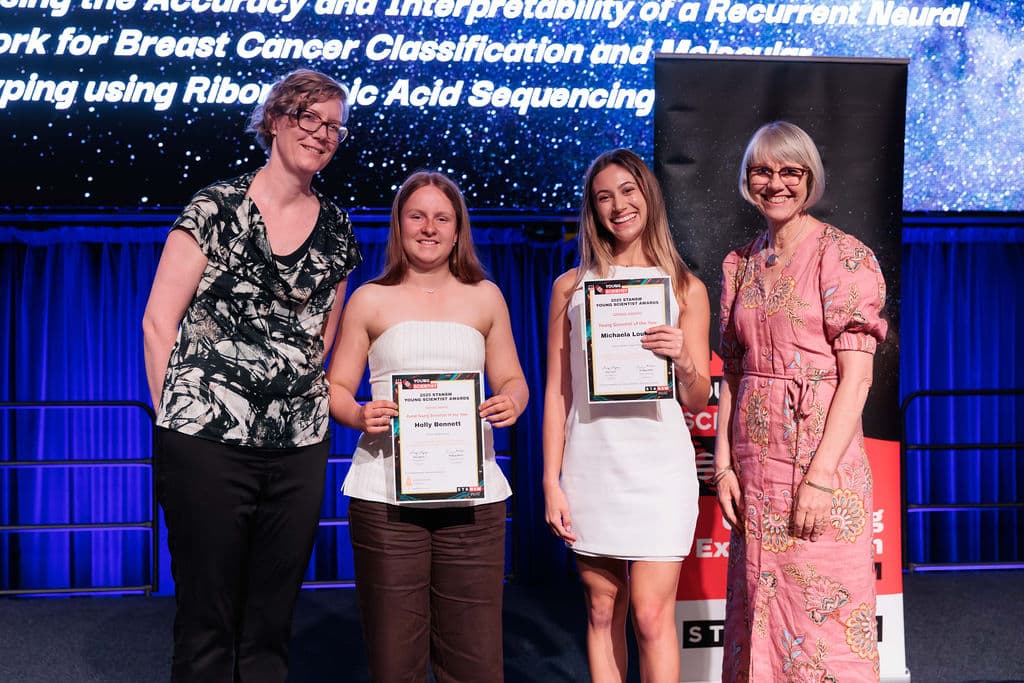
- Young Scientist of the Year Michaela Loukas from Marist Catholic College Penhurst, and Rural Young Scientist Holly Bennett from Kinross Wolaroi School
-
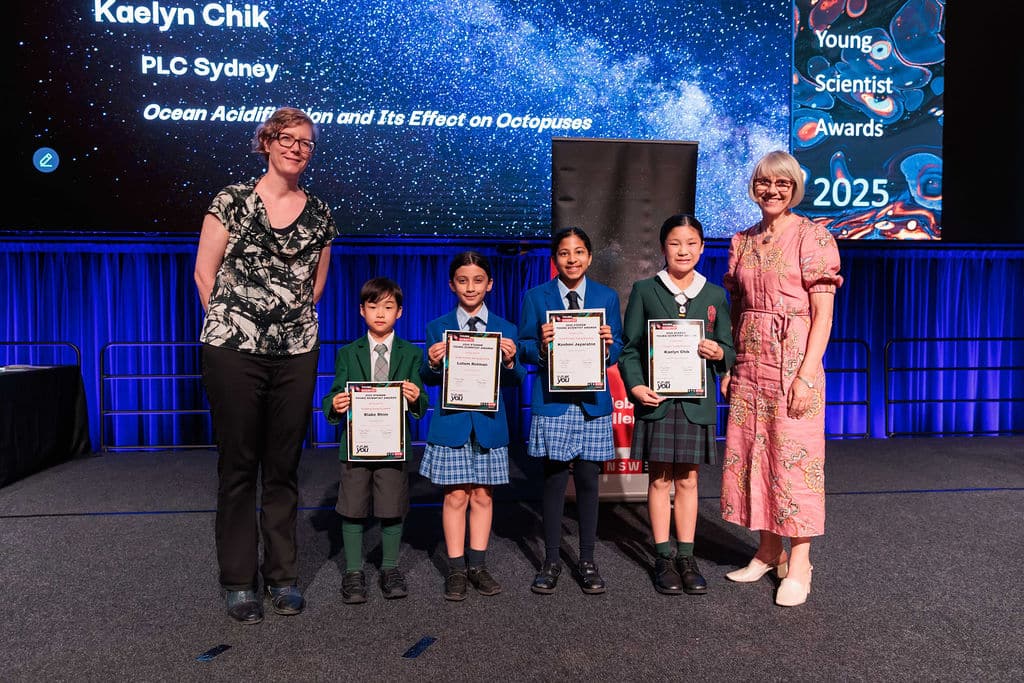
- 2025 Primary Young Scientists
-
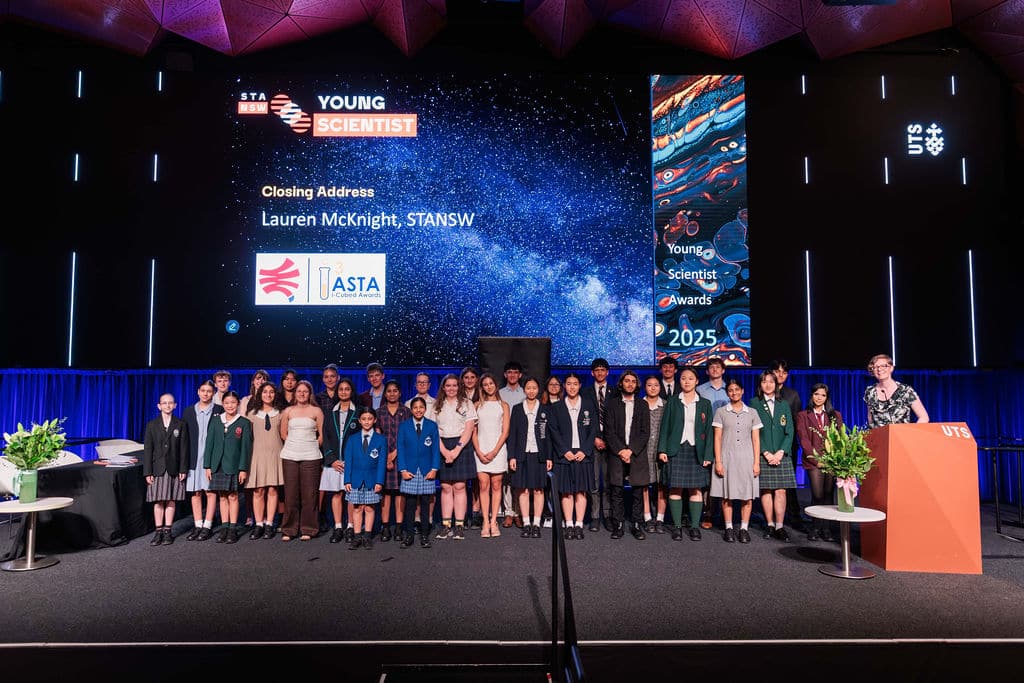
- 2025 National ASTA I3 Representatives
-
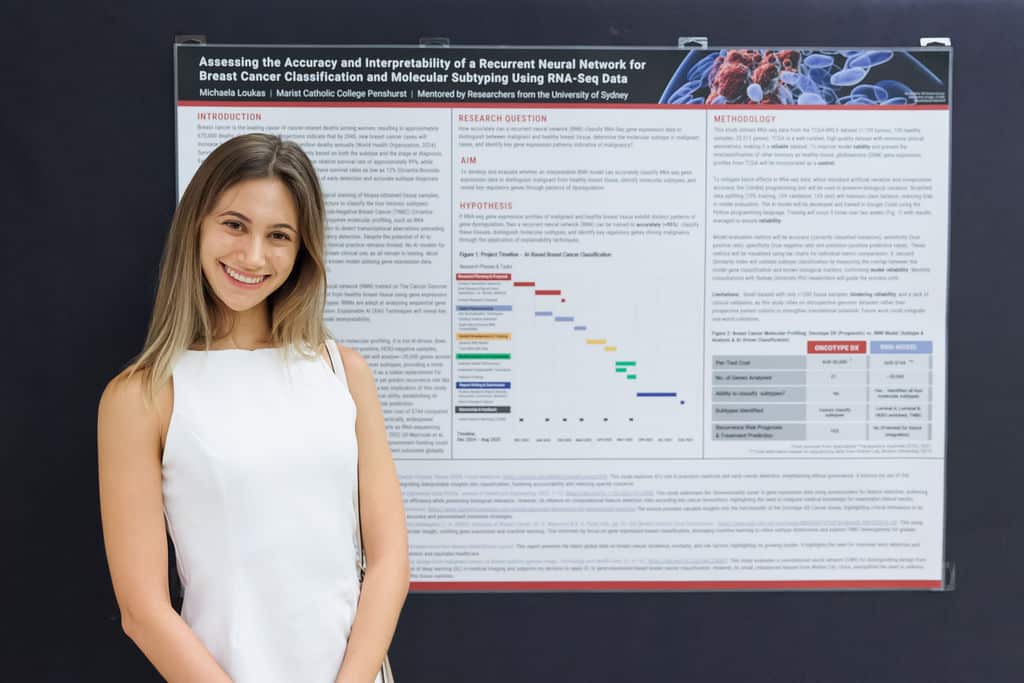
- 2025 Young Scientist of the Year, Michaela Loukas with her project Assessing the Accuracy and Interpretability of a Recurrent Neural Network for Breast Cancer Classification
-
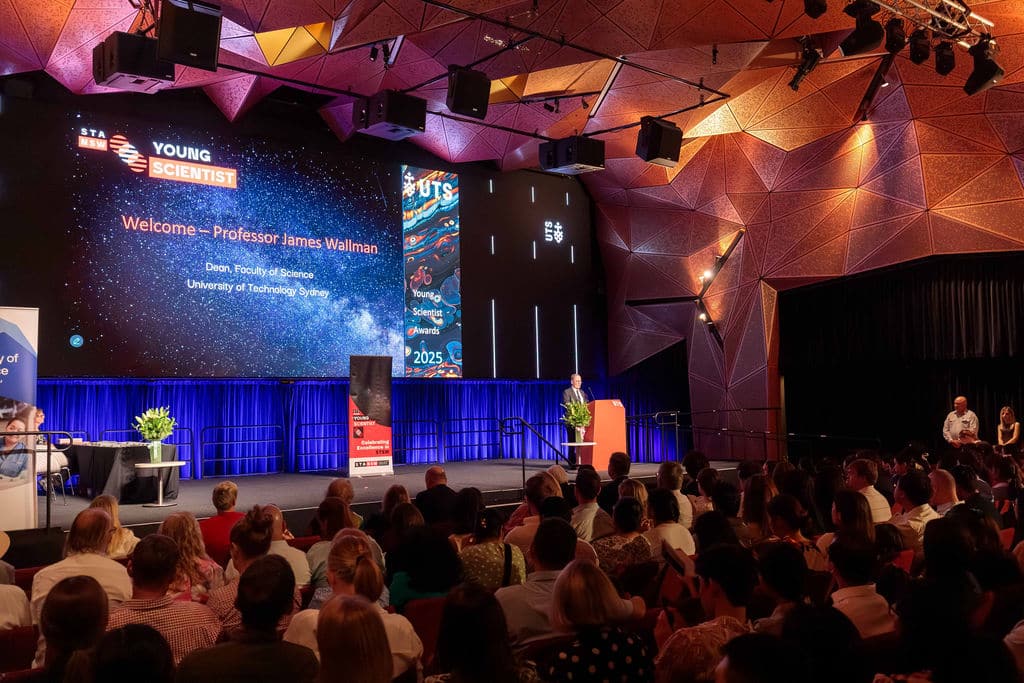
- 2025 Young Scientist of the Year Awards
About the Science Teachers’ Association of NSW
Founded in 1951, the Science Teachers’ Association of NSW (STANSW) is committed to advancing the profession of science education in New South Wales, with a focus on the professional learning, support, and advocacy of its teacher members. Embracing the passion of science educators who volunteer their time, the association provides leadership and support to its members. As education systems and pedagogy evolve, STANSW strives to serve as a voice for our teacher members, providing them with the support and guidance required to effortlessly adjust to change and consistently deliver excellence in science teaching.