
Scientific Critical Thinking Session 3: Scientific Modelling #
In this session, we will demonstrate a unit in which students use, compare, and develop scientific models to investigate scientific questions, such as where a species is likely to be found in the future. We’ll explore how data on ecological change is gathered and how scientists use different methods of population estimation, such as Fermi estimates, to simplify complex problems and guide research. New skills are then applied to decide on a scientific question, constructing a model, and determining the most important factors to include in a model (known as orders of understanding). This unit allows students to apply these conceptual tools to local and global ecological issues.
You can take this one back to the classroom.
Resources: Unit 2: Scientific Modelling – Scientific Thinking for All: A Toolkit
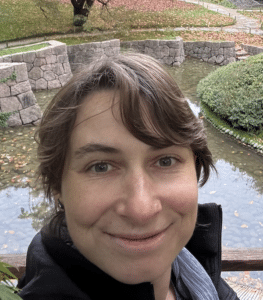
S. Emlen Metz, PhD
Lawrence Hall of Science
University of California, Berkeley
Dr. Metz conducts qualitative and quantitative research on student and teacher thinking and learning about scientific critical thinking, using what she learns to develop curricula for high school and undergraduate classrooms. She is committed to building student understanding of key conceptual tools from science and psychology in such a way that they are able to use them beyond the classroom, towards more thoughtful and informed personal and societal decision-making. She is deeply interested in critical and scientific thinking as social practices, and strategies for scaffolding more effective dialogues. She earned a Ph.D. in Psychology at the University of Pennsylvania in 2017, working with Jon Baron, Michael Weisberg, and Angela Duckworth on the psychology of epistemology in adolescents and adults; and a B.A. from Swarthmore College in Philosophy and Psychology.