
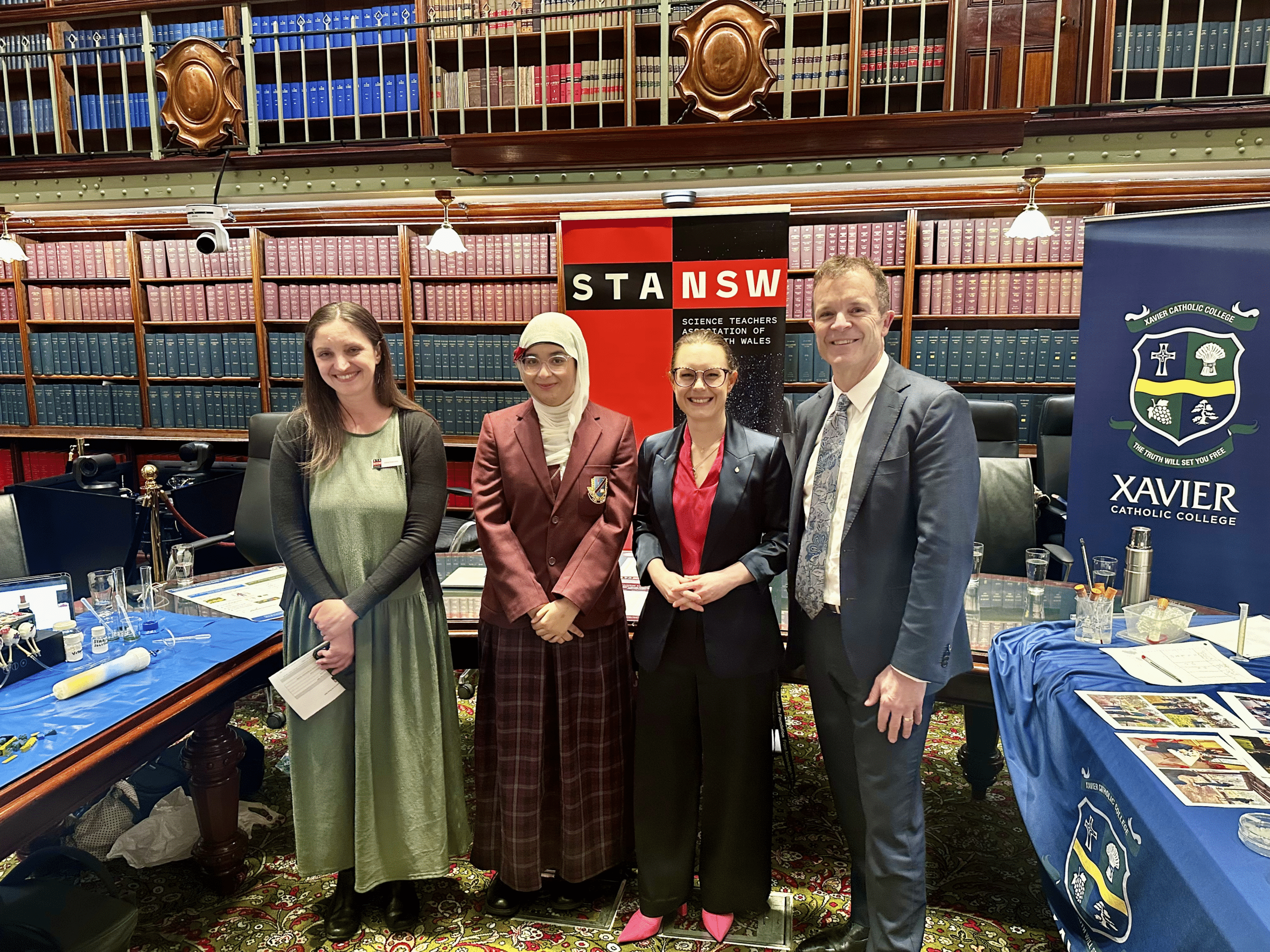
NSW Schools Showcase Inspiring Science at NSW Parliament
New South Wales schools engaged with policymakers at Science in the House, a special exhibition held at NSW Parliament in August, highlighting the outstanding work of science teachers and students from across the state.
Organised by the Science Teachers Association of NSW (STANSW) ahead of National Science Week, Science in the House connected Members of Parliament and their staff with schools across NSW, to experience innovative classroom science firsthand and recognise the vital role science education plays in preparing Australia’s future workforce.
The event was hosted by Sally Quinnell MP and attended by Jacqui Munro, Shadow Minister for Science and Technology, at NSW Parliament House. Exhibiting schools included Clarence Town Public School, Chester Hill High School, Lisarow High School (Central Coast), Kambala, Yanginanook, William Clarke College, Trinity Grammar Junior School, Lindisfarne Anglican Grammar School (Northern Rivers) and Xavier Catholic College (Albury) and Kambala.
STANSW Vice President, Lauren McKnight, says the event aligns with the 2026 National Science Week theme, “Seeds of Science: Nurturing Knowledge for All”, celebrating the power of curiosity, inquiry and scientific discovery in every classroom.
“Science in the House recognises the outstanding work of science teachers, showcasing exemplary science projects from schools across metropolitan and regional NSW.
It demonstrates the importance of sustained investment in science education to develop the skilled workforce needed for Australia’s future.”
We’re particularly passionate about advocating the needs of teachers and students in regional areas and have developed accessible professional learning to meet teachers’ needs. The 2026 Virtual Forum will bring together science teachers from all over NSW, online”
National Science Week took place Saturday 15 to Sunday 23 August 2026, with schools, universities and institutions all over Australia hosting events celebrating science, and more than 2,500 events held across Australia – https://www.scienceweek.net.au/
STANSW’s Virtual Forum for teachers continues to take place in September and October, and teachers can register at https://stansw.asn.au/learning-events/
Exhibition Highlights
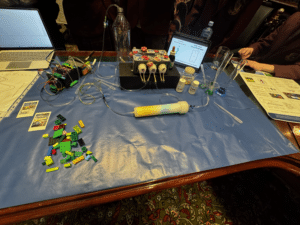
Chester Hill High School: Year 11 Chemistry students showcased the design and construction of a low-cost Arduino-based visible light (VIS) spectrometer to investigate vitamin C concentrations in beverages and separation of coloured compounds. Students demonstrated how accessible technology can be integrated into quantitative chemical analysis.
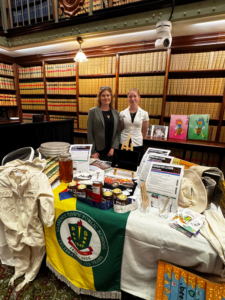
Clarence Town Public School: Showcased the Bee Humble Project, featuring student work, a video display, beekeeping equipment, hive components and honey tasting to demonstrate pollinator education and environmental sustainability.
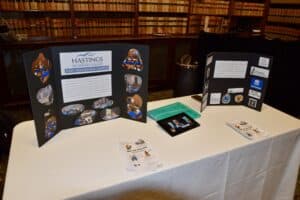
Hastings Secondary College: Presented Science in Action: Beyond the Classroom, connecting students with local industry professionals and showcasing authentic STEM learning through health, fisheries and regional science careers.
Yanginanook: Presented an interactive display of hands-on science investigations, student inquiry projects and classroom activities that promote scientific literacy through experiential learning.
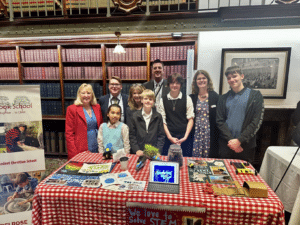
William Clarke College: Featured a collection of student depth studies and research projects, including energy efficiency, simple machines, ecosystems fieldwork and Science Extension investigations.
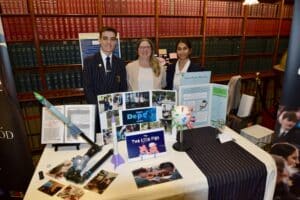
Trinity Grammar Junior School: Demonstrated how Design Thinking, Microbits and robotics are integrated into STEAM inquiry learning to develop creativity, problem-solving and engineering skills.
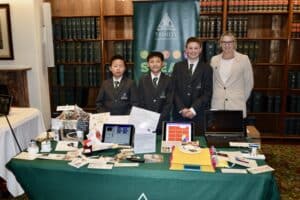
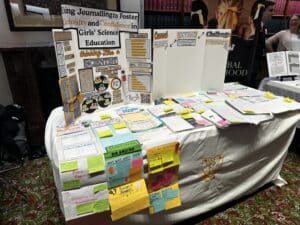
Kambala: Showcased how science journalling transforms student thinking by fostering curiosity, creativity, and confidence through reflective learning. Kambala has seen higher engagement in STEM through interactive journalling activities and reflection, developing scientific inquiry and encouraging students to think like scientist.
Lindisfarne Anglican Grammar School: Showcased a range of student STEM initiatives, including Science Extension projects, STEM Ambassadors, sustainability programs, engineering challenges and environmental research.
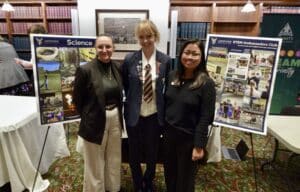
Xavier Catholic College: Highlighted student science communication projects created for the Sleek Geeks Science Eureka Prize through videos, storyboards and inquiry-based investigations.
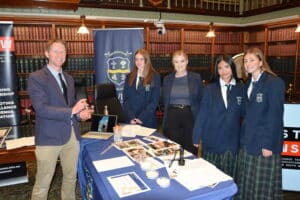
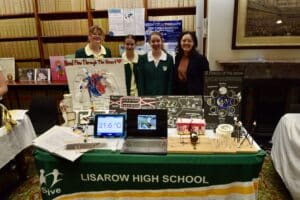
Lisarow High School: Displayed student research posters, STEM models and science demonstrations from Stage 4–6, showcasing inquiry, innovation and practical science learning across multiple disciplines.
STANSW President, Jacqueline McCarthy, addressed guests:
Good afternoon distinguished guests, Members of the New South Wales Parliament, colleagues, teachers and most importantly the students,
I begin today by acknowledging the Gadigal people of the Eora Nation, the traditional custodians of the land on which NSW Parliament House stands. I pay my respects to Elders past and present. I acknowledge, too, that Aboriginal and Torres Strait Islander peoples were and continue to be this continent’s first scientists, its first astronomers, ecologists and engineers and that their careful observation of this land stretches back tens of thousands of years.
For those I have not had the opportunity to meet yet, my name is Jacqueline McCarthy and it is my privilege, as President of the Science Teachers’ Association of New South Wales, to welcome you all to Science in the House.
STANSW exists to support the teaching of science in this state, and to equip our teachers with the skills and support that they need to thrive.
Thank you to the Honourable Emily Sarval MLC and Sally Quinnell MP for Camden for hosting us today. And to my colleagues on the STANSW Council and our wonderful staff, whose effort has brought this whole day together.
We gather today on the cusp of National Science Week the one week each year when the whole country is encouraged to be curious. Our purpose today is a simple one, and I hope a useful one: to bring science education out of the classroom and into this building, so that the people who make policy for New South Wales education can meet the people who deliver it and those who learn it.
Because science education is the cornerstone of everything we mean when we say science. Before there is a research scientist, a clean energy project, a medical breakthrough or a start-up, there is a child in a classroom being shown that the world is amazing and that they are capable of knowing all about it. The pipeline everybody talks about does not begin at university. It begins in kindy, with a question that a teacher took seriously.
Today you will meet ten school communities who take those questions very seriously indeed. I ask you to join me in welcoming:
- Clarence Town Public School
- Chester Hill High School
- Hastings Secondary College, Port Macquarie Campus
- Kambala
- William Clarke College
- Trinity Grammar, Junior School
- Lindisfarne Anglican Grammar School
- Xavier Catholic College
- Lisarow High School
And last, but not least, my own students from Yanginanook School. Early in my career I read the line – Some people wait their whole lives to meet their favourite scientists, I get to teach mine. Chloe, Charlie, Levi and Myla, you and your classmates are my favourite scientists, and I am very proud to be your science teacher.
Public, Catholic and independent. Metropolitan, regional and coastal. Primary and secondary. What each of these schools share is not a budget or a postcode, it is teachers who found a way to foster curiosity, and students who ran with it.
To the Parliamentarians present, my invitation is this: please do not stay at the edges of the room. Walk the displays. Ask the students what went wrong the first time they carried out their experiment or STEM task and what they did about it. Ask the teachers what they could achieve with a little more support, I am sure they will tell you, precisely and without exaggeration.
To all our students: this is your Parliament. Speak with confidence. You have earned your place here.
To our teachers: thank you. You do the quiet, patient work on which the future of this state genuinely depends.
Members, colleagues and friends welcome to Science in the House. Please enjoy the day.
I would like to welcome Sally Quinnell MP for Camden to say a few words…